Butun axtardiqlarinizi tapmaq ucun buraya: DAXIL OLUN
  Mp4 Mp3 Axtar Yukle
  Video Axtar Yukle
  Shekil Axtar Yukle
  Informasiya Melumat Axtar
  Hazir Inshalar Toplusu
  AZERI CHAT + Tanishliq
  Saglamliq Tibbi Melumat
  Whatsapp Plus Yukle(Yeni)

  • Ana səhifə
  • Təsadüfi
  • Yaxınlıqdakılar
  • Daxil ol
  • Nizamlamalar
İndi ianə et Əgər Vikipediya sizin üçün faydalıdırsa, bu gün ianə edin.
Birthday mode (Baby Globe) settings

Fayl:ISS-35 Great Sandy Desert northwestern Australia.jpg

  • Fayl
  • Müzakirə
  • Fayl
  • Faylın tarixçəsi
  • Faylın istifadəsi
  • Faylın qlobal istifadəsi
  • Metaməlumatlar
Fayl:ISS-35 Great Sandy Desert northwestern Australia.jpg
Sınaq göstərişi ölçüsü: 800 × 531 piksel. Digər ölçülər: 320 × 212 piksel | 640 × 425 piksel | 1.024 × 680 piksel | 1.280 × 850 piksel | 2.560 × 1.699 piksel | 4.284 × 2.844 piksel.
Faylın orijinalı (4.284 × 2.844 piksel, fayl həcmi: 4,9 MB, MIME növü: image/jpeg)
Bu fayl Vikianbarda yerləşir. Açıqlama səhifəsindəki məlumatlar aşağıda göstərilib.
Vikianbar azad lisenziyalı media anbarıdır. Siz də töhfə verə bilərsiniz.

Xülasə

İzahISS-35 Great Sandy Desert northwestern Australia.jpg
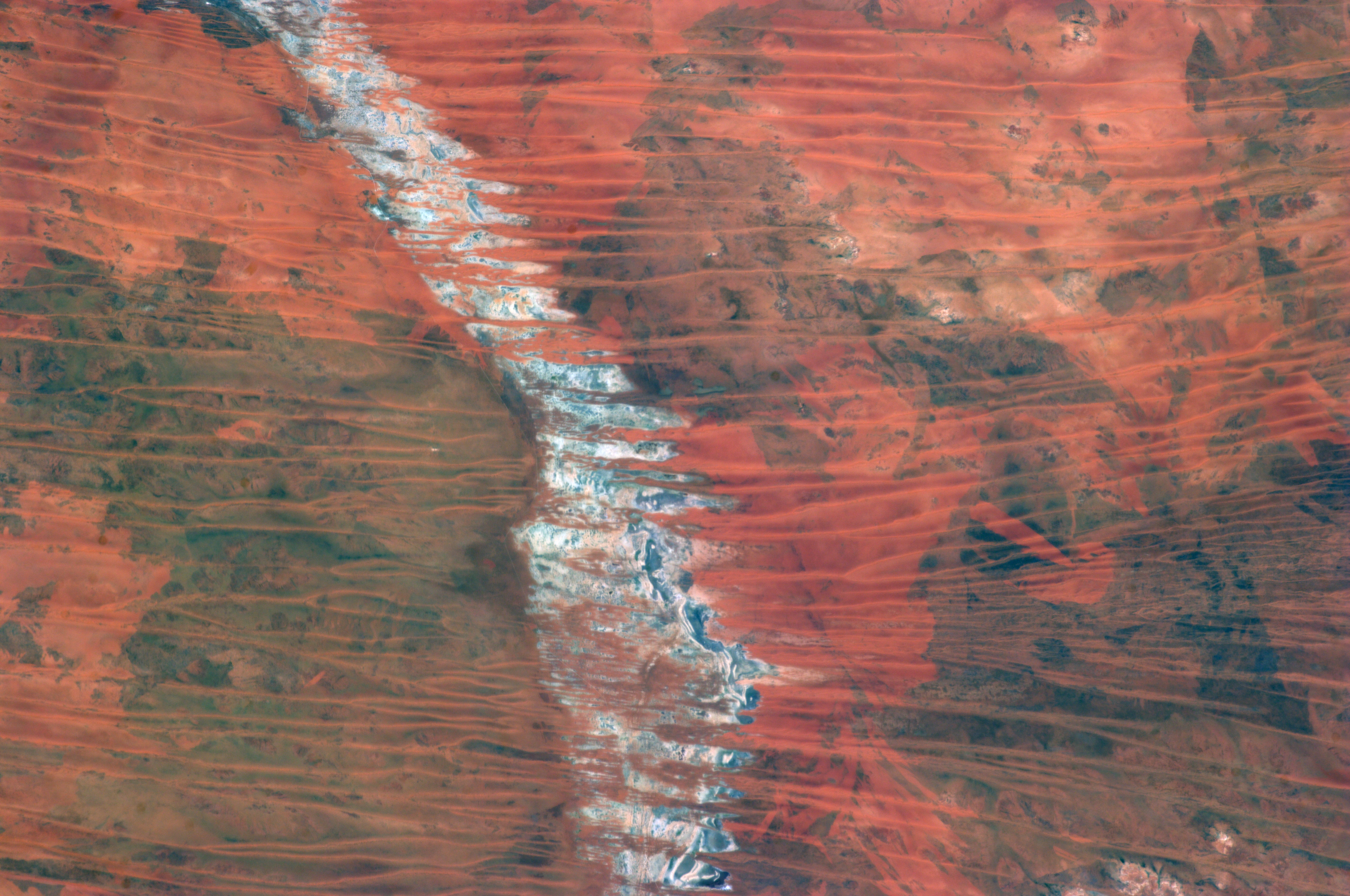
English: One of the Expedition 35 crew members aboard the Earth-orbiting International Space Station used a 400 millimeter lens to photograph this view of the Great Sandy Desert, northwestern Australia on March 25.
  • It bears evidence that much of Australia is arid. In northwest Australia the Great Sandy Desert holds great geological interest as a zone of active sand dune movement; strings of narrow lakes that represent very ancient rivers are also present. While a variety of dune forms can be seen in the region, this photograph features numerous linear dunes (approximately 25 meters high) separated in a roughly regular fashion (0.5–1.5 kilometers), and aligned closely to the winds that generated them-that is, winds blowing from east to west.
  • Where linear dunes converge, dune confluences point downwind. One of the main visual impressions flying over such tropical dune fields – both from an airplane or from the orbital station outpost-apart from the dune patterns are fire scars where thin vegetation has been burned off the dunes. The result is dunes that appear red from the underlying sand (image top left and top right), and darker areas where the vegetation remains (image lower left and lower right).
  • The white feature visible down the center of the image is Lake Auld, the white color being the result of a cemented combination of fine clayey sediment and salts from evaporation of flood waters that occasionally fill the lake. Wider views of the area show that this lake is part of what is now known to have been a major, ancient river system in northwest Australia, draining northwest to the Indian Ocean. Such sinuous lakes are also known in Australia as "river lakes."
  • Scientists point out that the river system is remarkably well preserved considering that the rivers were probably active in the Paleocene Epoch more than 55 million years ago. Australia then lay much further south in a wetter climatic zone. Today's desert climate results in almost all rivers in the Great Sandy Desert being dry. Linear dunes can be seen entering Lake Auld on the east side. During flooding events, the sand of the dune noses is dispersed, becoming incorporated into the lake floor sediments together with muds and salts. During the long intervening dry periods, sand can blow across the lake floor to build thinner, smaller dunes visible as linear accumulations on the west side of the lake.
Tarix 25 mart 2013
Mənbə http://spaceflight.nasa.gov/gallery/images/station/crew-35/html/iss035e009454.html
Müəllif NASA
Digər versiyalar
This image or video was catalogued by Johnson Space Center of the United States National Aeronautics and Space Administration (NASA) under Photo ID: ISS035-E-009454.

This tag does not indicate the copyright status of the attached work. A normal copyright tag is still required. See Commons:Licensing.
Other languages:

Afrikaans ∙ العربية ∙ беларуская (тарашкевіца) ∙ български ∙ Bahaso Jambi ∙ català ∙ čeština ∙ dansk ∙ Deutsch ∙ English ∙ español ∙ فارسی ∙ français ∙ galego ∙ magyar ∙ հայերեն ∙ Bahasa Indonesia ∙ italiano ∙ 日本語 ∙ 한국어 ∙ македонски ∙ മലയാളം ∙ Nederlands ∙ polski ∙ português ∙ русский ∙ sicilianu ∙ slovenščina ∙ Türkçe ∙ українська ∙ 简体中文 ∙ 繁體中文 ∙ +/−

Public domainPublic domainfalsefalse
Public domain
This file is in the public domain in the United States because it was created by the Image Science & Analysis Laboratory, of the NASA Johnson Space Center. NASA copyright policy states that "NASA material is not protected by copyright unless noted". (NASA media use guidelines or Conditions of Use of Astronaut Photographs). Photo source: ISS035-E-9454.

العربيَّة | Deutsch | English | español | français | italiano | kurdî | македонски | മലയാളം | Nederlands | português | sicilianu | +/−

Lisenziya

Public domainPublic domainfalsefalse
Public domain This file is in the public domain in the United States because it was solely created by NASA. NASA copyright policy states that "NASA material is not protected by copyright unless noted". (See Template:PD-USGov, NASA copyright policy page or JPL Image Use Policy.)
Warnings:
  • Use of NASA logos, insignia and emblems is restricted per U.S. law 14 CFR 1221.
  • The NASA website hosts a large number of images from the Soviet/Russian space agency, and other non-American space agencies. These are not necessarily in the public domain.
  • Materials based on Hubble Space Telescope data may be copyrighted if they are not explicitly produced by the STScI.[1] See also {{PD-Hubble}} and {{Cc-Hubble}}.
  • The SOHO (ESA & NASA) joint project implies that all materials created by its probe are copyrighted and require permission for commercial non-educational use. [2]
  • Images featured on the Astronomy Picture of the Day (APOD) web site may be copyrighted. [3]
  • The National Space Science Data Center (NSSDC) site has been known to host copyrighted content. Its photo gallery FAQ states that all of the images in the photo gallery are in the public domain "Unless otherwise noted."

Başlıqlar

Bu faylın nəyi təmsil etdiyinə dair bir sətirlik izahat əlavə et

Bu faylda təsvir olunan elementlər

təsvir edir

əhəmiyyətli hadisə

Expedition 35 ingilis

müəlliflik hüququ statusu

ictimai mülkiyyət

təyinetmə üsulu: work of the federal government of the United States ingilis

yaranma tarixi

25 mart 2013

captured with ingilis

Nikon D3S ingilis

kataloq kodu

ISS035-E-009454

kataloq: Media catalogue of the Johnson Space Center ingilis

ISO speed ingilis

200

exposure time ingilis

0,003125 saniyə

f-number ingilis

9

focal length ingilis

400 millimetr

Faylın tarixçəsi

Faylın əvvəlki versiyasını görmək üçün gün/tarix bölməsindəki tarixlərə klikləyin.

Tarix/VaxtMiniatürÖlçülərİstifadəçiŞərh
hal-hazırkı20:53, 30 aprel 201320:53, 30 aprel 2013 tarixindəki versiyanın miniatür görüntüsü4.284 × 2.844 (4,9 MB)Ras67high quality development from NASA's raw data
20:41, 9 aprel 201320:41, 9 aprel 2013 tarixindəki versiyanın miniatür görüntüsü4.256 × 2.832 (986 KB)Ras67levels
20:38, 9 aprel 201320:38, 9 aprel 2013 tarixindəki versiyanın miniatür görüntüsü4.256 × 2.832 (655 KB)Ras67{{Information |Description={{en|1=One of the Expedition 35 crew members aboard the Earth-orbiting International Space Station used a 400 millimeter lens to photograph this view of the Great Sandy Desert, northwestern Australia on March 25. * It bears e...

Faylın istifadəsi

Bu faylı istifadə edən səhifə yoxdur (digər layihələrdəki səhifələr göstərilmir).

Faylın qlobal istifadəsi

Bu fayl aşağıdakı vikilərdə istifadə olunur:

  • hr.wikipedia.org layihəsində istifadəsi
    • Velika pješčana pustinja

Metaməlumatlar

Bu faylda fotoaparat və ya skanerlə əlavə olunmuş məlumatlar var. Əgər fayl sonradan olunubsa, bəzi parametrlər bu şəkildə göstərilənlərdən fərqli ola bilər.

Kamera istehsalçısıNIKON CORPORATION
Kamera modeliNIKON D3S
Ekspoziya müddəti1/320 saniyə (0,003125)
F nömrəsif/9
ISO sürət reytinqi200
Orijinal tarix və vaxt03:39, 25 mart 2013
Fokus məsafəsi400 mm
İstifadəçi şərhiNASA 2008336
Genişlik4.284 px
Hündürlük2.844 px
Komponentbaşı bit
  • 16
  • 16
  • 16
SıxılmamışSıxılmış
Rəng modeliRGB
OrientasiyaNormal
Rəng komponentlərinin sayı3
Üfüqi xətt72 dpi
Şaquli xətt72 dpi
Data düzülüşüchunky format
Proqram təminatıAdobe Photoshop
Faylın dəyişməsi tarixi və vaxtı22:40, 30 aprel 2013
Ekspozisiya proqramıNormal proqram
Tarix və vaxt rəqəmləşdirilir03:39, 25 mart 2013
APEX exposure bias0
Maximum land aperture3 APEX (f/2,83)
Metering modeDizaynlı
İşıq mənbəsiNaməlum
FlaşFlaş yandırılmadı
DateTime subseconds15
DateTimeOriginal subseconds15
DateTimeDigitized subseconds15
Rəng sahəsisRGB
Sensing methodBirkristallı matrisli rəngli sensor
Fayl mənbəsiRəqəmsal fotoapparat
Səhnə tipiFoto-təsvir birbaşa çəkilmişdir
Custom image processingNormal proses
Exposure modeAvtomatik ekspozisiya
Ağ balansıAvtomatik tənzimlənmiş
Rəqəmsal zoom nisbəti1
Focal length in 35 mm film400 mm
Scene capture typeStandart
Səhnə idarəsiHeç biri
KontrastNormal
DoymuşluqNormal
KəskinlikNormal
Subject distance rangeNaməlum
GPS etiket versiyası0.0.2.2
Mənbə — "https://az.wikipedia.org/wiki/Fayl:ISS-35_Great_Sandy_Desert_northwestern_Australia.jpg"
Informasiya Melumat Axtar